Lake Shore Dynamics / Signal Development Framework
A framework for training frontier deep learning (AI) architectures on high-frequency financial data and related market context.
signal_volume.yaml
LIVE
forecast cumulative_volume_1m
model: pulse_v1
context: 600 seconds
representation: static_lob
validation_loss: 0.0148

The product
A framework for signal research.
Core IP
Proprietary model architecture
A multi-frequency representation built for noisy market data, from microstructure to global context.
Data infrastructure
Synchronize and stream asynchronous data into a coherent training pipeline, without full-dataset preprocessing.
Experiment management
Every model-dataset pairing and run is tracked by a built-in registry, with checkpointing, logging and export to dashboards.
Training + evaluation
High-frequency market simulation integrated directly into the training loop, surfacing degradation, regime sensitivity and overfitting as they happen.
Deployment
Put validated signals into a live environment.
Philosophy
Modeling markets at the level of individual orders.
We founded Lake Shore Dynamics on our conviction that it is both necessary and possible to model financial markets from the level of individual orders. The behavior of market participants is the ultimate filter for the information involved in price and market formation. If we can explain markets at the resolution of order flow, we can realistically assess strategies and model the impact of macroeconomic events and company-specific news on our ability to trade successfully.
We are researchers and builders with backgrounds in mathematics, statistics and computer science. We default to skepticism, whether evaluating our own results or those of others. We believe large-scale market data and architectural innovation will capture the idiosyncratic behavior of market participants without imposing biasing assumptions.
A static projection of the limit order book, compressed to a third of its size, used to forecast one-minute cumulative volume out of sample.

Static Limit Order Book representation
DATASET
NASDAQ ITCH data
25 levels each side at 10ms, reconstructed from raw order flow.
Compression
70% reduction
A static projection of the book, compressed so the model can view ten minutes of rich context.
EVALUATION
Held-out data
Out-of-sample, forward looking results, with a standalone scoring script.
Proof-of-concept engagements
Start with a question.
End with a live signal.
1
Define problem statement
Scope objective, data, and success criteria
2
Develop adaptations
Configure and iterate on the framework
3
Present results
Report, scoring script, and out-of-sample evaluation
4
Go live
Deploy on a live data feed for trading
CASE STUDY
Intraday forecasting
DATASET
Mixed basket of equities, conditioned on broader market data
ENGAGEMENT
Fixed-fee PoC, optional extension
DELIVERY
Accuracy benchmarking, impact, and path to deployment
DATA ACCESS RESIDENCY
Third-party licensed data via Fintech Sandbox, no client data transfer necessary
The team
Building the future of signal research.

Daniel Gold
CO-FOUNDER & CEO
MSc Computational & Applied Mathematics · University of Chicago · Constellation Software

Andrew Dennehy
Co-founder, Research Lead
PhD Candidate, Computational & Applied Mathematics · University of Chicago · NSF Fellow · Leidos

Christopher Ley
Founding ML Engineer
PhD Electrical Engineering · Continental · Center for Mathematical Modelling

Aleksandr Kovalev
Lead Engineer
MSc Mathematics & Computer Science · Booking.com
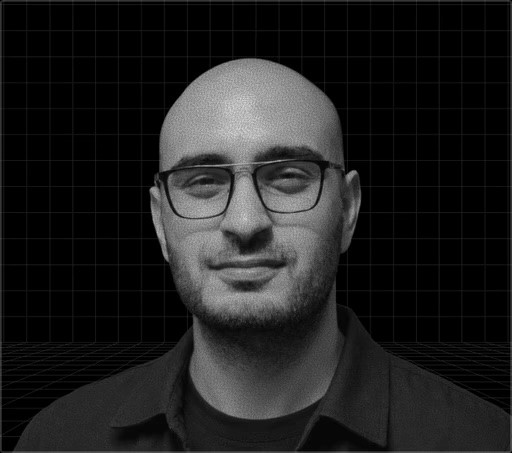
Mani Salahmand
Software Engineer
BSc Applied Computer Science · Embedded systems